
Key takeaways
- For preschoolers, instructor quality and class design usually matter more than choosing the theoretically ideal activity.
- Compare how much time children are moving, how long they wait, how correction is handled and whether the class fits your child's temperament.
- The activity your family can attend consistently for six months will usually offer more than the perfect activity attended irregularly.
Start with the child, not with a list of benefits
Every preschool activity has a website promising coordination, confidence, listening and social skills. Those claims are so broad that they do not help much with a decision. The useful questions are more concrete: does your child like climbing, music, chasing, copying movements, wrestling, costumes, balls, repetition? Do they enjoy a group or need more individual structure? How do they handle waiting?
At three and four, enjoyment matters because repetition matters. A child cannot receive the value of an activity they fight about every week. That does not mean quitting at the first hard class; it means choosing a format with enough natural interest that the hard parts are worth tolerating.
Martial arts: structure, individual progression and controlled contact
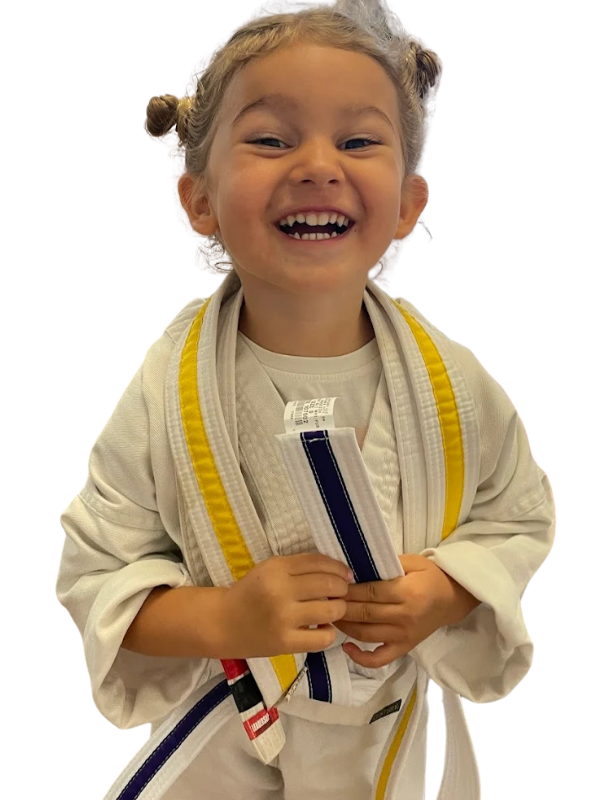
A good preschool martial arts class tends to have a predictable start and finish, repeated rules, short movement drills, targets and simple partner tasks. There is usually no bench and no need to keep up with a team; children can practice the same basic shape at their own level.
This can fit children who like copying, striking pads, rough-and-tumble movement within clear rules, or visible markers of progression. It may fit less well for a child who strongly dislikes proximity to others or who wants a wide-open, constantly moving environment.
Gymnastics: climbing, tumbling and a broad movement base
Preschool gymnastics often gives children a rich menu of movement: hanging, rolling, balancing, jumping, landing, climbing and moving through stations. For a child who wants to use the whole room and enjoys equipment, it can be an excellent fit.
Watch the waiting structure. A well-run station system keeps children moving; a class where one child performs while ten wait can be hard at this age. Also ask how the gym handles children who are cautious about height or inversion, because pressure around a scary movement can quickly turn a good activity into a weekly conflict.
Dance: rhythm, sequence, body awareness and performance
Dance gives children a different kind of physical structure: moving to music, copying sequences, controlling shape and timing, and often preparing something the group can perform. Children who love music, costumes, repetition or expressive movement may connect immediately.
The performance element can be motivating for some children and uncomfortable for others. Ask how much emphasis is placed on recital preparation at preschool age, how corrections are delivered and whether a child who is shy is allowed to warm into participation rather than being pushed to perform.
Soccer: open space, running and the beginnings of team play
Preschool soccer can be joyful chaos in the best sense: lots of running, chasing a ball, changing direction and learning the first idea that teammates and boundaries exist. It suits children who want space and continuous movement more than detailed instruction.
The team concept is still emerging at this age, so parents should not expect adult-looking soccer. The best preschool programs know that clustering around the ball, forgetting which goal is yours and stopping to inspect the grass are part of the developmental stage rather than evidence of a bad athlete.
Compare the format, not the marketing
Visit a normal class if you can. Count how much time children spend moving versus waiting. Watch whether instructors know names, whether they physically demonstrate, how they respond to a child who refuses, and whether corrections are calm. Those details predict your actual Tuesday far better than a list of stated benefits.
Also notice what the program asks from parents: required events, recital fees, uniforms, seasonal commitments, travel, fundraising, weekend games. None of those are inherently bad. They simply belong in the decision because a preschool activity is a family schedule, not only a child activity.
- Movement time versus line time
- Class length and pace
- Instructor response to fear, distraction and refusal
- Amount of competition or performance pressure
- Equipment, uniforms and extra fees
- How many fixed weekly commitments the family is taking on
Does a preschooler need more than one activity?
No child needs a packed activity calendar at three or four. Variety can be wonderful, but free play, outdoor time and family life also count. One well-chosen weekly activity can be plenty, especially while the child is also adapting to preschool or childcare.
If you try two activities, watch the child and the adults. Fatigue, constant rushing and parental resentment are real costs. A schedule that looks enriching on paper can become too much if every afternoon ends in the car.
The best first activity is the one that becomes ordinary
The long-term win is not choosing the activity that produces the most impressive four-year-old. It is helping a child discover that there are places outside home where they can learn from another adult, practice something, be part of a group and return next week.
Any of these activities can do that when the instruction is good. If your child is drawn to one, start there. If they are neutral, choose the best instructor and easiest schedule. You can change later; preschool is exploration, not specialization.
Common questions
About the author
Elevate Martial Arts Instructional Team
Coaches, Middletown & Clearlake
Our coaching staff has taught children, teens and adults in Lake County for more than 20 years. Guides in the Learning Center are written from what we see in class each week and reviewed by the instructional team before publishing. They are general educational information, not medical, psychological or legal advice.
About this guide
- Written from what Elevate coaches see week to week in Little Dragons classes for ages 3–4 in Middletown.
- General educational information for parents. It is not medical, developmental, psychological or diagnostic advice, and no outcome is promised.
- Reviewed by the Elevate Martial Arts instructional team.
- General educational information only — not medical, psychological or legal advice.