Key takeaways
- Adult classes are mostly beginners; starting late is the normal case, not the exception.
- Recovery capacity, not capability, is the main thing that changes with age — build the ramp accordingly.
- Tell the coach about injuries and limits before your first class, not after something aggravates them.
The question underneath the question
Most people who ask whether they are too old are not really asking about age. They are asking whether they will be the oldest person in the room, whether they will embarrass themselves, whether they will get hurt, and whether a body that has spent fifteen years at a desk can handle it. Those are fair questions, and they have better answers than the age question does.
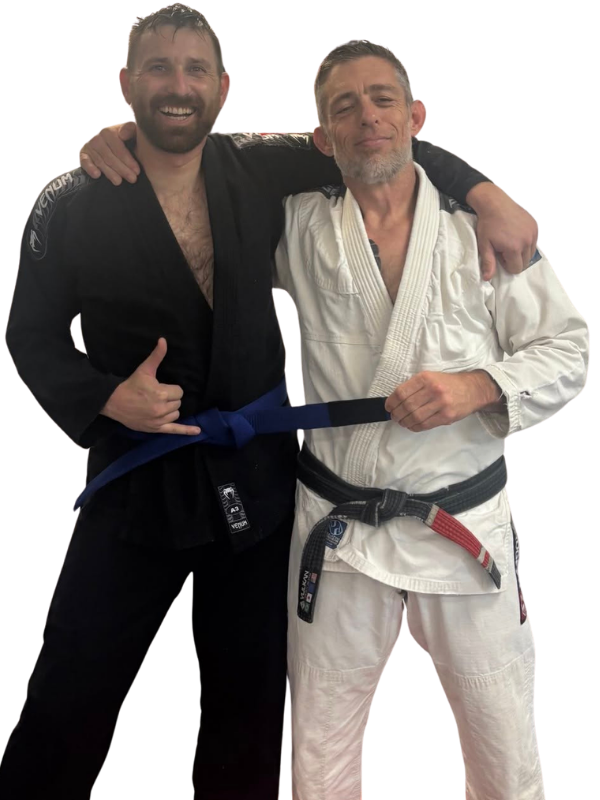
The reality of a typical adult class is unglamorous and reassuring: a mix of ages and body types, a lot of people who are new, and a small number of experienced students who mostly remember being new. Nobody is watching you the way you imagine. Everyone is occupied with their own attempt at the same technique, which is one of the quiet advantages of a partner-based activity.
What actually changes with age
Learning capacity does not disappear; adults often pick up technique faster than teenagers because they ask better questions and are more willing to be told the same thing twice. What genuinely changes is recovery. Connective tissue adapts more slowly than muscle, sleep quality matters more, and the cost of doing too much in the first month is higher than it was at twenty.
That has a practical consequence: the ramp should be longer than your enthusiasm wants it to be. Two sessions a week for the first couple of months, with a full rest day between, is a better plan for most adult beginners than four sessions in the first fortnight followed by six weeks off with a strained something. The people still training a year later are almost always the ones who started modestly.
- Recovery time increases; training frequency should start lower
- Warm-ups become more useful, not less
- Sleep and hydration have a visible effect on how sessions feel
- Old injuries need to be declared and worked around from day one
Old injuries, current conditions and what to say
Almost every adult beginner arrives with something: a knee, a lower back, a shoulder that does not like overhead work, a surgery from a decade ago. This is normal and it is workable — but only if the coach knows. Tell us before the class rather than after the technique that aggravated it, and be specific about the movement rather than the diagnosis: "deep squats hurt" is more useful to a coach than a label.
Where a condition is significant, speak to your doctor first. Martial arts is physical activity with contact, and nobody at a gym is qualified to clear you medically. Good schools will adapt drills, offer alternatives and let you sit out anything that does not suit you, and you should expect that flexibility without having to negotiate for it.
This is general information, not medical advice. Check with a qualified clinician before starting if you have any injury or health condition.
Choosing a discipline that fits your body
Brazilian jiu-jitsu is ground-based grappling: leverage, position and problem-solving. It tends to suit adults who like puzzles, who prefer to avoid impact, and who are happy with close physical contact. Intensity is highly adjustable, since a round can be technical and slow or hard and fast depending on the partners and what the coach asks for.
Kickboxing is striking on the feet, usually with pads and bags for beginners. It suits adults who want conditioning, who prefer not to be on the ground, and who like clear repeatable mechanics. It asks more of ankles, knees and shoulders than grappling does in the first months, and less of your comfort with being physically tangled up with someone. MMA blends both and is generally a better second step than a first one.
- Bad knees or ankles: often easier in grappling than in high-volume striking
- Uncomfortable with close contact: kickboxing is usually the better start
- Wanting conditioning above all: striking classes tend to be more continuous
- Wanting problem-solving and low impact: jiu-jitsu tends to suit
What the first three months usually feel like
Weeks one and two are mostly disorientation and unfamiliar soreness in muscles you had forgotten about. You will not remember the technique names and that is expected. Weeks three to six is where most people either quit or settle in: the movements start to feel less random, you know a few names, and turning up stops requiring a decision each time.
By around month three, most adult beginners can follow a class without constant instruction, have a rough sense of what they are bad at, and have noticed improvements in conditioning. Progress after that is slower and less dramatic, which is why the students who last are usually the ones who came to enjoy the training itself rather than the improvement curve.
Starting as an adult at Elevate
Our adult classes in Middletown and Clearlake are open to beginners with no experience and no particular fitness level. A first class is a warm-up, a technique drilled with a partner at a pace you can manage, and a controlled application of it. You will not be thrown into hard sparring, and you are allowed to sit out anything.
Wear a t-shirt and shorts or leggings for a first session, bring water, and arrive a few minutes early to talk to the coach about anything they should know. Most adults find the first class less intimidating than the parking lot outside it.
The intimidation problem, honestly
Age is often a stand-in for a different worry: walking into a room where everyone knows what they are doing. That feeling is real, and it lasts roughly two sessions. Practical measures help — arrive early, tell the coach it is your first class, wear ordinary clothes, and accept that you will be visibly clueless for a while, as everyone in the room was.
It is worth knowing what a good school does with a nervous adult beginner: someone is assigned to you, the technique is broken into a version you can actually attempt, and nobody comments on how you look doing it. If a place does not do those things, the problem is the place rather than your age.
Making it fit a working week
Adults rarely stop because of physical limits. They stop because two evenings a week turned out to be unprotected. Choosing class nights that survive a bad day at work matters more than choosing the theoretically ideal schedule, and agreeing those nights with your household in advance removes most of the weekly negotiation.
It also helps to build in slack. Assume you will miss sessions — for travel, illness, family — and decide in advance that missing does not end the arrangement. Adults who plan for interruption return from it; adults who expect perfect attendance tend to treat the first gap as the end.
- Pick nights that survive a difficult work day
- Agree the schedule with your household before you start
- Plan the restart rule before you need it
- Two protected sessions beat four aspirational ones
Common questions
Parent Pro Tip
Consistency beats intensity, and it is not close. Two sessions a week for a year changes far more than six weeks of five sessions followed by nothing. Choose the volume you can hold on a bad week and let the good weeks be a bonus.
- Pick the two fixed slots you can defend in your calendar.
- Plan for missing a week without treating it as failure.
- Measure months, not days.
From the Elevate Martial Arts coaching staff — general guidance, not professional advice.
About the author
Elevate Martial Arts Instructional Team
Coaches, Middletown & Clearlake
Our coaching staff has taught children, teens and adults in Lake County for more than 20 years. Guides in the Learning Center are written from what we see in class each week and reviewed by the instructional team before publishing. They are general educational information, not medical, psychological or legal advice.
About this guide
- Written from what Elevate coaches see week to week with adult beginners in Middletown and Clearlake.
- General educational information, not medical or fitness advice. Talk to your doctor before starting a new activity, particularly with an existing injury or health condition.
- Reviewed by the Elevate Martial Arts instructional team.
- General educational information only — not medical, psychological or legal advice.