Key takeaways
- Jiu-jitsu is chess-like, close-contact and low-impact; kickboxing is continuous, on the feet and mechanically simpler to start.
- Both offer adjustable intensity and both are open to beginners with no fitness base.
- Trying both for a few weeks is more informative than any comparison article, including this one.
What each one actually is
Brazilian jiu-jitsu is a grappling art focused on control and submissions, mostly on the ground. There is no striking. A class typically includes a warm-up, a technique broken into steps and drilled with a partner, and positional or full rounds of live practice where both people are resisting at an agreed intensity. The defining feature is that you can practise at full effort against a resisting partner without hitting anyone, which is unusual among combat sports.
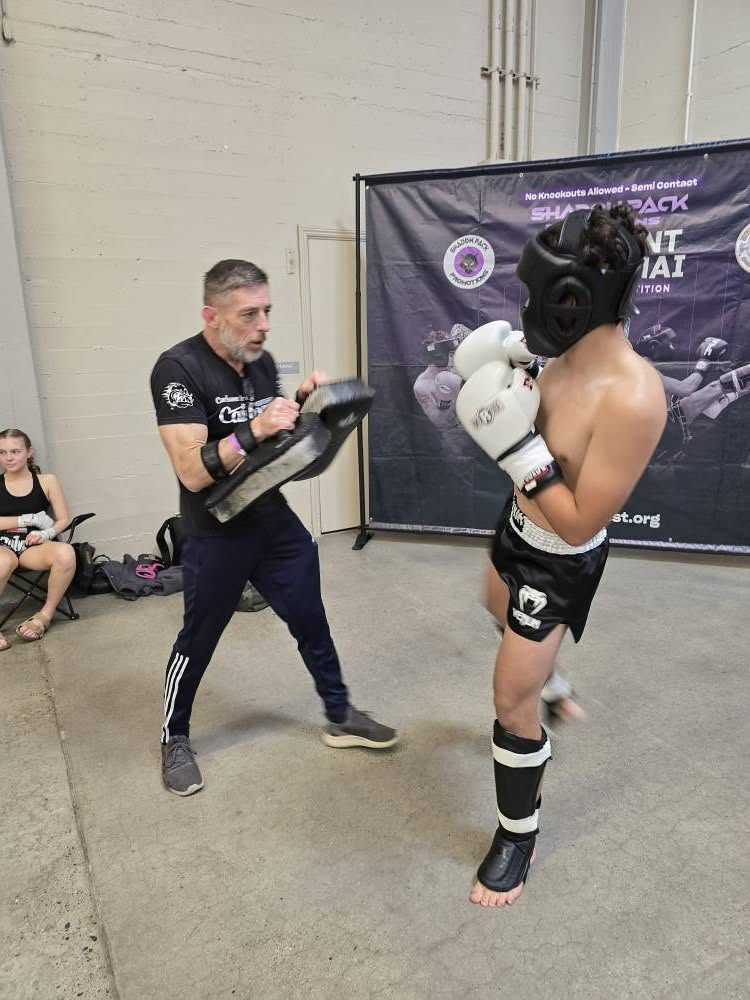
Kickboxing is striking with hands, feet, knees and shins, taught primarily through pads, bags and partner drills. Beginner classes are conditioning-heavy and technique-focused, with sparring introduced later and only when a student wants it. The defining feature is rhythm: rounds, timing, and a continuous work pace that produces a strong cardiovascular effect.
How the two feel to a beginner
New jiu-jitsu students commonly describe the first month as confusing and physically strange — you are close to another person, in positions you have never been in, being controlled by someone half your size who barely seems to be trying. It is humbling in a way most adults are not used to. Those who stay usually say the puzzle is what hooked them.
New kickboxing students more often describe the first month as tiring but comprehensible. Punch a pad, learn a combination, do it faster. The mechanics take years to perfect but the first version is accessible on day one, which makes it a gentler entry for people who want to feel competent quickly.
- BJJ: slower to feel competent, highly engaging for problem-solvers
- Kickboxing: immediately accessible, strong conditioning effect
- BJJ: close contact throughout, no strikes
- Kickboxing: contact controlled by pads and drills for beginners
Physical demands and impact
Jiu-jitsu is low-impact in the joint-loading sense — there is little running or jumping — but it is demanding on grip, core and stamina, and it is uncomfortable if you dislike being underneath someone. It is often the more accessible option for people with knee or ankle issues, though anyone with neck or shoulder problems should discuss it with their coach and doctor first.
Kickboxing loads the lower legs, hips and shoulders with repetitive work, and shin conditioning takes time. It tends to suit people who want cardiovascular work and do not want to be on the floor. Those with wrist, shoulder or knee issues should mention them early so drills can be adapted.
Both involve physical contact and some risk. Speak to a qualified clinician before starting if you have any injury or condition, and tell your coach what you need adapted.
Stress, focus and why people say it helps
Adults frequently cite stress as the main reason they keep training. The most common explanation we hear is attention: both disciplines demand enough concentration that there is no capacity left over for the work day. Whether you are solving a positional problem or trying to land a combination cleanly, the mind is fully occupied for an hour, which many people find more restorative than exercise they can do while ruminating.
There is also the social element, which is easy to overlook. Adult classes provide regular contact with people outside work and family, which for many is the part they would miss most if they stopped. We would not claim training treats stress or anxiety — that is a matter for qualified professionals — but many adults find it supports how their week goes.
How to choose
If you are comparing on paper, use these rough filters: choose jiu-jitsu if you like strategy, want low-impact training, are comfortable with close contact, and are patient with a slow start. Choose kickboxing if you want conditioning, prefer personal space, like clear repeatable technique, and want to feel capable sooner. If you cannot decide, try both — the difference is obvious within a couple of sessions.
Also consider the practical constraints, which decide more than preference does. Which classes run on nights you can actually attend, at the location closest to you, with a coach you like. A discipline you love on paper and attend twice a month will do less for you than the one that fits your Tuesday.
- Comfortable with close contact and enjoy puzzles: start with BJJ
- Want cardio and personal space: start with kickboxing
- Existing knee or ankle issues: BJJ is often more forgiving
- Dislike being on the ground: kickboxing
- Still unsure: attend one of each and decide with your body
Trying both at Elevate
We run adult jiu-jitsu and kickboxing in Middletown, and kickboxing in Clearlake, with beginners welcome in either. Wear a t-shirt and shorts or leggings, bring water, and arrive a few minutes early to talk to the coach. Nobody is put into hard sparring in a first class, and you can sit out anything.
Most adults know within three or four sessions which one they want to continue with, and a fair number end up doing both. If you would like to try, the simplest route is to request a free first class and tell us which discipline you would like to start with.
The learning curve, month by month
In kickboxing, most beginners can throw recognisable basics within a few sessions and will spend the following year refining timing, distance and defence. Progress feels quick at first and then becomes about detail, which suits people who like polishing mechanics.
In jiu-jitsu, the first few months are largely about surviving positions and learning a vocabulary. Many people describe a turning point somewhere between three and six months when the chaos starts resolving into recognisable situations. It is a slower, less immediately rewarding start, and it is exactly the part that people who love the art tend to look back on fondly.
Practicalities: gear, hygiene and scheduling
Kickboxing eventually requires gloves, wraps and shin guards; jiu-jitsu requires a uniform, and a rash guard for no-gi training. Neither is needed for a first class. Both have straightforward hygiene expectations — clean kit, short nails, and staying home with anything contagious — which matter more in grappling because of the contact involved.
Scheduling is the other practical factor, and often the deciding one. Look at which discipline runs on nights you can reliably attend at the location nearest you, and start there. You can always switch or add later; almost nobody regrets starting with whichever one fitted their week.
- First class: t-shirt, shorts or leggings, water
- Later: gloves and shin guards for striking, a uniform for jiu-jitsu
- Short nails, clean kit, and stay home if you are unwell
- Choose the discipline that fits your realistic training nights
Common questions
Parent Pro Tip
Consistency beats intensity, and it is not close. Two sessions a week for a year changes far more than six weeks of five sessions followed by nothing. Choose the volume you can hold on a bad week and let the good weeks be a bonus.
- Pick the two fixed slots you can defend in your calendar.
- Plan for missing a week without treating it as failure.
- Measure months, not days.
From the Elevate Martial Arts coaching staff — general guidance, not professional advice.
About the author
Elevate Martial Arts Instructional Team
Coaches, Middletown & Clearlake
Our coaching staff has taught children, teens and adults in Lake County for more than 20 years. Guides in the Learning Center are written from what we see in class each week and reviewed by the instructional team before publishing. They are general educational information, not medical, psychological or legal advice.
About this guide
- Written from what Elevate coaches see week to week with adult beginners in Middletown and Clearlake.
- General educational information, not medical or fitness advice. Talk to your doctor before starting a new activity, particularly with an existing injury or health condition.
- Reviewed by the Elevate Martial Arts instructional team.
- General educational information only — not medical, psychological or legal advice.