
Key takeaways
- Simple systems that a child can maintain themselves work better than elaborate ones that require constant parent upkeep.
- One consistent spot for papers, one for gear, and one place to check deadlines covers most of what school organization needs.
- A short weekly reset — five to ten minutes going through the backpack — catches problems before they pile up.
- Organization is a learnable skill built through repetition, not a trait some kids simply have and others don't.
Simple systems beat elaborate ones
It's tempting to solve a disorganized backpack with an elaborate system — color-coded folders for every subject, multiple trays, a detailed planner with its own rules. In practice, these systems often fail not because they're bad ideas but because they require more maintenance than a child (or a busy family) can realistically keep up.
A simpler system that actually gets used every day will outperform a sophisticated one that gets abandoned after two weeks. The goal is the minimum structure that solves the actual problem — losing papers, forgetting gear, missing deadlines.
One place for papers, one place for gear
A single folder or binder pocket for papers coming home, and a single folder for papers that need to go back, removes the guesswork about where something is or where it's supposed to end up. Adding more categories than that usually adds complexity without adding much real benefit for most kids.
The same logic applies to physical gear: one spot by the door for the backpack and shoes, one hook for the jacket. When there's only one place a thing could be, there's a much better chance it actually ends up there.
- One folder for papers coming home from school
- One folder or spot for papers going back
- One consistent spot near the door for backpack, shoes and any gear
- One place — a wall calendar, whiteboard or planner — to check what's due
A short weekly reset
Even a good system accumulates clutter over a week — old flyers, half-finished worksheets, forgotten permission slips at the bottom of a backpack. A five- to ten-minute weekly reset, ideally on the same day each week, catches this before it becomes an overwhelming backlog.
Doing this together with a younger child for the first several weeks, then gradually handing it over, teaches the habit more effectively than either doing it for them indefinitely or expecting them to figure it out alone.
One visible place to track what's due
For older elementary and middle school students juggling multiple assignments, a single visible calendar or whiteboard where due dates get written down — rather than trusting memory alone — reduces the number of surprises. The format matters less than having exactly one place everyone checks, instead of scattered notes in different spots.
Teens managing their own schedules generally do better with a system they choose and maintain themselves, even if it's not the system a parent would pick, because ownership tends to matter more than the specific format at that age.
How Elevate can help
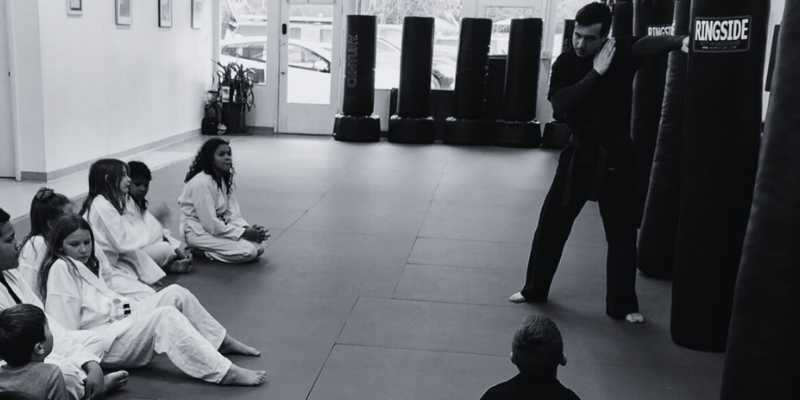
Belt progression is, at its core, an organization system for effort — a clear, visible structure of what comes next, broken into defined stages a student can track their own progress against. That's a concrete model of organization students experience firsthand every week, not just something explained to them.
Individualized instruction from coaches trained through the Kovar Systems curriculum and continuing education means each student's next step is specific to them, which mirrors the kind of personal system that actually works for organization — one sized to the individual rather than a generic template. Students in Dragons (ages 9–12, 45-minute classes) are also given leadership opportunities, like helping track a newer student's progress, that build real practice at the kind of attentiveness organization requires.
The consistent weekly structure of class — same day, same time, same gear needed every week (uniform, belt, water bottle) — gives younger students in Little Dragons (ages 3–4, 40-minute classes) and Tigers (ages 5–8) low-stakes, repeated practice at simply keeping track of their own things, which is a skill that carries directly into managing a backpack.
When a system isn't clicking
If a child consistently loses track of things despite a simple system in place, it's worth checking whether the system itself is too complicated for their age, or whether the deadlines and materials being tracked are more numerous than what's reasonable to expect a child of that age to manage without more support. Adjusting the system down in complexity is usually more effective than adding rules to an already-struggling one.
Common questions
Parent Pro Tip
Protect the transition, not just the task. Most homework battles are actually transition battles. A ten-minute buffer with food and movement between school and the table removes more friction than any new reward chart.
- Snack, water, and ten minutes of moving before anything academic.
- Same place, same time, every day — the routine does the arguing for you.
- Stop at the agreed time even if it is unfinished. Consistency is the point.
From the Elevate Martial Arts coaching staff — general guidance, not professional advice.
About the author
Elevate Martial Arts Instructional Team
Coaches, Middletown & Clearlake
Our coaching staff has taught children, teens and adults in Lake County for more than 20 years. Guides in the Learning Center are written from what we see in class each week and reviewed by the instructional team before publishing. They are general educational information, not medical, psychological or legal advice.
About this guide
- Written from how Elevate structures its curriculum, coaching and classroom routines in Middletown and Clearlake.
- General educational information for families. No external research is cited and no outcome is promised.
- Reviewed by the Elevate Martial Arts instructional team.
- General educational information only — not medical, psychological or legal advice.