
Learning Center

Parent Guides

Practical, judgment-free guides on emotions, confidence, focus, motivation, screens, friendships and sticking with hard things — written by coaches who see these questions every week.

107 guides in Parent Guides

Long-form answers to the questions parents in Lake County ask most.

A Little Dragons age martial arts student practicing in class.

Preschool Years

Is My 3- or 4-Year-Old Ready for a Structured Class?

A deep guide to preschool readiness: what matters, what parents often overestimate, what coaches can teach inside the class, and when waiting a few months really is the better choice.

13 min read

A parent and young child having a calm conversation before an activity.

Preschool Years

Separation Anxiety and the First Few Preschool Classes

A long-form guide to preschool separation: why doorways are hard, what parents and instructors can do, what makes it worse, and how to tell ordinary adjustment from a class that is not working.

12 min read

A child setting down a game controller beside a window in the evening.

Screen Time & Technology

How Much Screen Time Is Too Much?

Hour limits are hard to enforce and easy to argue about. A displacement check — sleep, movement, schoolwork, friendships — is usually the more practical measure.

11 min read

A parent and child sitting together and talking calmly at home.

Character Development

Why Does My Child Quit Everything?

Children usually quit at the same moment: when novelty ends and effort begins. Planning for that wall changes the outcome more than any pep talk.

11 min read

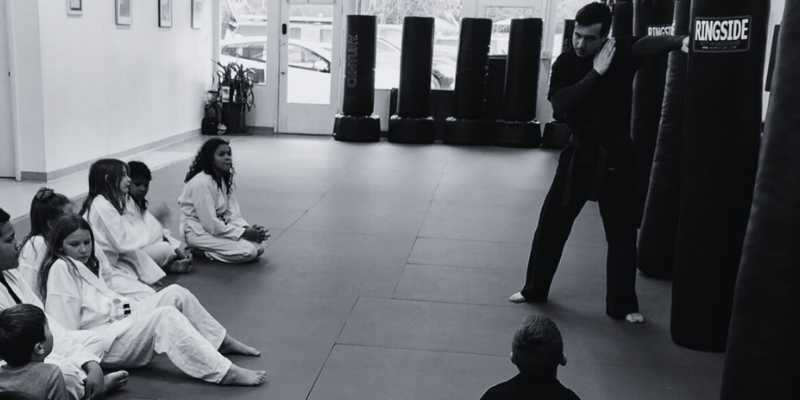
Elevate students seated on the mat watching an instructor demonstrate a technique.

Character Development

What Activities Help Kids Build Resilience?

Resilience is practiced, not taught. The useful question is how often an activity lets a child get something wrong and immediately try again.

10 min read

A parent and child sitting together and talking calmly at home.

Parenting Tips

My Child Refuses to Try New Things

A child saying no to everything is usually saying no to not knowing what happens. Remove the unknowns and the no gets smaller.

10 min read

Elevate students seated on the mat watching an instructor demonstrate a technique.

Confidence

Is Martial Arts Good for Shy Kids?

A predictable routine, one partner at a time, and no requirement to speak in front of the group — the reasons shy kids often settle in faster than parents expect.

10 min read

A parent and child sitting together and talking calmly at home.

Parenting Tips

How Many Activities Are Too Many?

Two activities can be heavier than three. Count committed evenings, travel time included, and watch what gives first.

10 min read

A parent and child sitting together and talking calmly at home.

Parenting Tips

How Can I Help My Child Manage Big Emotions?

Regulation is a skill children practice, not a mood they arrive with. Here is the notice-pause-reset-rejoin sequence, what a structured class can rehearse, and what to say afterward.

7 min read

A teenager standing outdoors in late afternoon light.

Character Development

What Is Grit—and Can Kids Learn It?

Every activity has a wall about six weeks in. Grit is the set of habits a child uses to get past it — not the absence of wanting to stop.

7 min read

A parent and child sitting together and talking calmly at home.

Parenting Tips

How to Help Your Child Handle Disappointment

Cancelled plans, a lost match, a friend who chose someone else. A practical sequence for the hour after a letdown, and the phrases that tend to help rather than escalate.

8 min read

A parent and child sitting together and talking calmly at home.

Parenting Tips

Teaching Kids Gratitude Without Lectures

Why the guilt speech backfires, what actually builds a habit of noticing, and five low-effort family practices that survive a busy week.

8 min read

A parent and child sitting together and talking calmly at home.

Family Life

Bedtime Routines That Actually Work

Why the fight starts earlier than you think, a wind-down sequence that holds up on school nights, and how to handle the child who keeps getting up.

8 min read

Elevate students seated on the mat watching an instructor demonstrate a technique.

Confidence

Helping Your Child Speak Up for Themselves

Four scripts every child can learn, how to stop answering for them, and a graded ladder of real-world practice that starts with ordering their own drink.

8 min read

A teenager standing outdoors in late afternoon light.

Character Development

Helping Your Child Recover From a Big Setback

The difference between a bad day and a real setback, the four things that support recovery, and how to reintroduce activity without pretending nothing happened.

9 min read

A child using a tablet at a kitchen table.

Screen Time & Technology

Creating a Family Technology Agreement

A one-page agreement any family can write in half an hour: device-free zones, charging locations, the review schedule, and the clause that keeps kids talking to you when something goes wrong.

8 min read

Character Development

Praise vs Encouragement: What to Say Instead of "Good Job"

Praise evaluates a child ("you're so smart"); encouragement describes what they did ("you kept going after that mistake"). Encouragement tends to produce children who attempt harder things, because it values something they can repeat on purpose.

10 min read

Emotional & Behavioral

Emotion Coaching: A Practical Guide for Parents

Emotion coaching means treating a big feeling as legitimate while still holding a limit on behaviour. In practice: notice it early, name it without adding a lesson, set the behavioural limit, and problem-solve later once the child is calm.

11 min read

Focus & ADHD

ADHD-Friendly Strategies for Home, School and Activities

Children with ADHD generally do better with shorter instructions, predictable routines, movement built into the day rather than used as a reward, and immediate specific feedback. The standard stays the same; the size of each chunk changes.

12 min read

Inclusive Activities

Autism-Friendly Activities: What Actually Helps

The features that make an activity work for an autistic child are mostly structural: a predictable session order, low sensory load, a consistent instructor, an agreed way to take a break, and partial participation treated as success.

11 min read

Family Life

Family Routines That Survive a Real Week

Routines fail because they are designed on a calm Sunday for an imaginary week. Build the version that works on your hardest day, make it visible, and let the routine do the reminding instead of your voice.

10 min read

Character Development

Chores, Natural Consequences and Building Responsibility

Responsibility grows when a child owns a real job that someone actually depends on, and when the ordinary consequences of forgetting are allowed to happen. Rescuing and reminding both remove the lesson.

11 min read

Character Development

Intrinsic Motivation: How to Build It and What Kills It

Lasting motivation grows from three conditions: getting visibly better at something, having genuine choices within it, and belonging with the people doing it. External rewards work quickly and then crowd out the internal reasons.

11 min read

Character Development

Leadership Skills for Kids and Teens: What Actually Builds Them

Children build leadership by being given small amounts of real responsibility for other people, with an adult nearby. Titles, badges and pep talks do very little on their own; repeated practice at helping, explaining and taking ownership does most of the work.

11 min read

Community

Volunteering and Community Involvement for Families

Volunteering helps children most when it is regular, small and involves seeing the person who benefits. One recurring hour a month usually does more than a single dramatic project, because the child gets to build an identity as someone who helps.

10 min read

Confidence

Healthy Risk-Taking: Why Children Need Manageable Danger

Children build courage by repeatedly attempting things that could plausibly go badly in a small way. Removing all risk removes the practice, and the usual result is a child who is more fearful, not safer.

11 min read

Health & Wellness

Injury Prevention and Long-Term Athletic Development

Most youth injuries are overuse rather than accidents, and the strongest protections are unglamorous: varied movement, real rest days, sleep, sensible load increases, and a culture where a child can say something hurts without losing status.

11 min read

Health & Wellness

Sports Specialization vs Diversified Movement: What the Guidance Says

Public guidance generally advises against year-round single-sport specialisation before mid-adolescence. Varied movement supports broader development and is associated with lower overuse injury and burnout, while depth in one activity still matters for building genuine competence.

10 min read

Parent Guides

Parent and Coach Communication That Helps Your Child

Coaches can adapt to almost anything they know about. Tell us the specific, useful details early — fears, diagnoses, hard weeks at home, what a bad day looks like — and raise concerns directly, privately, and before they have been building for a month.

10 min read

Elevate students seated on the mat watching an instructor demonstrate a technique.

Why Elevate?

How Elevate Instructors Are Trained

Being good at a martial art and being good at teaching it are different skills. Here is how our staff train for the second one.

7 min read

A teenager outdoors on a bright day in a rural Northern California landscape.

Lake County Family Guide

Best Kids Activities in Middletown, CA: A Parent's Guide

A practical look at what is actually available to Middletown families — seasonal leagues, outdoor recreation and year-round indoor options — and how to build a week that holds up in January.

7 min read

Elevate students seated on the mat watching an instructor demonstrate a technique.

Lake County Family Guide

Best Kids Activities in Clearlake, CA: A Parent's Guide

What is genuinely available to families in Clearlake and along the north and east shore — parks, the lake, school programs and year-round classes — with realistic notes on weather and scheduling.

7 min read

Elevate students seated on the mat watching an instructor demonstrate a technique.

Lake County Family Guide

Best After School Activities in Lake County

How Lake County families actually build after-school afternoons — the options, the logistics, and why two consistent sessions beat four aspirational ones.

7 min read

A teenager outdoors on a bright day in a rural Northern California landscape.

Lake County Family Guide

Homeschool PE Options in Lake County

Practical PE options for homeschooling families in Lake County, what makes an activity easy to document, and how martial arts fits a homeschool schedule.

7 min read

A young person outdoors in the rolling landscape of rural Northern California.

Lake County Family Guide

Things to Do in South Lake County, California

A local guide to what to do around Middletown, Hidden Valley Lake and Cobb — including outdoor recreation, free activities, rainy-day choices, birthdays and structured kids programs.

10 min read

Children and adults gathered on the mats during an Elevate Martial Arts class in Middletown.

Lake County Family Guide

Things to Do in Middletown, California

Parks, pool days, library programs, local events, martial arts, birthdays and indoor family activities in Middletown, CA.

9 min read

A young child participating in a structured movement activity at Elevate Martial Arts.

Lake County Family Guide

Things to Do in Hidden Valley Lake, California

What families and visitors can actually do around Hidden Valley Lake — including indoor play, golf, resident amenities and nearby public South County activities.

8 min read

A young person outdoors in a rural Northern California landscape similar to the Cobb Mountain area.

Lake County Family Guide

Things to Do in Cobb, California

A local guide to Cobb, California — Boggs Mountain, forest recreation, seasonal pools, golf, community events and nearby family activities.

9 min read

A parent and child sitting together and talking calmly at home.

Emotional & Behavioral

My Child Melts Down After School

The meltdown that happens the minute your child walks in the door is rarely about the door. It is often the release of a full day held together with effort.

7 min read

Elevate students seated on the mat watching an instructor demonstrate a technique.

Emotional & Behavioral

My Child Gets Frustrated Too Easily

A child who gives up or gets upset at the first sign of difficulty is not being dramatic. They are running out of tools faster than the task is asking for them.

7 min read

A parent and child sitting together and talking calmly at home.

Emotional & Behavioral

My Child Gives Up When Things Get Hard

When a child gives up the moment something gets hard, it usually is not about the task. It is about what struggling seems to mean about them.

7 min read

Elevate students seated on the mat watching an instructor demonstrate a technique.

Emotional & Behavioral

My Child Argues About Everything

Constant arguing is exhausting, but it is rarely random. Most of the time, a child has learned that pushing back gets them something, even if that something is just your attention.

7 min read

A parent and child sitting together and talking calmly at home.

Emotional & Behavioral

My Child Doesn't Listen the First Time

If your child only seems to hear you on the third or fourth try, the problem is usually not their hearing — it is what they have learned about which requests actually count.

6 min read

A teen standing outdoors, relaxed and looking off camera.

Emotional & Behavioral

My Child Is Always Comparing Themselves to Others

Comparison is one of the most natural things a developing brain does. The goal is not to eliminate it, but to give a child another, steadier way to measure themselves.

7 min read

A parent and child sitting together and talking calmly at home.

Friendship & Social Skills

My Child Feels Left Out

"Nobody wants to play with me" is one of the hardest sentences a parent hears. Most of the time it describes a moment, not a pattern — but the moment still needs attention.

7 min read

Elevate students seated on the mat watching an instructor demonstrate a technique.

Friendship & Social Skills

My Child Has Trouble Making Friends

Friendship rarely clicks in a single conversation. It builds through the same kids showing up, week after week, until familiarity turns into comfort.

7 min read

A parent and child sitting together and talking calmly at home.

Friendship & Social Skills

My Child Is Too Shy to Join Activities

A shy child isn't refusing to participate out of stubbornness. They're usually waiting until the unfamiliar feels a little less unfamiliar.

6 min read

A teen standing outdoors, relaxed and looking ahead.

Friendship & Social Skills

My Child Doesn't Know How to Handle Conflict

Kids aren't born knowing how to disagree well. It's a skill, and like most skills, it improves with practice rather than with a single lecture.

8 min read

Elevate students seated on the mat watching an instructor demonstrate a technique.

Friendship & Social Skills

My Child Gets Picked Last

Being picked last is one of the more public forms of disappointment a child can experience. It's worth taking seriously — and it's also more fixable than it feels in the moment.

6 min read

A parent and child sitting together and talking calmly at home.

School Success

Helping Kids Transition Back to School

Summer's loose schedule doesn't switch off overnight. A gradual return to routine, started a week or two early, makes the first day feel far less like a wall.

7 min read

Elevate students seated on the mat watching an instructor demonstrate a technique.

School Success

Helping Children Become More Independent

Independence isn't something you announce to a child — it's something they build through repeated chances to handle things themselves, including the chances where they don't get it right the first time.

8 min read

Elevate students seated on the mat watching an instructor demonstrate a technique.

School Success

Helping Kids Stay Organized

The most effective organization systems for kids are the boring, simple ones — one folder, one spot for shoes, one place to check what's due — maintained consistently rather than an elaborate system nobody keeps up.

6 min read

A child looking at a tablet screen at home.

Screen Time & Technology

My Child Is Addicted to Screens

Before reaching for a clinical word, it helps to separate a strong habit from a genuine concern — and to know what each one calls for.

7 min read

A child looking at a tablet screen at home.

Screen Time & Technology

Healthy Gaming Habits

Most families don't need to eliminate gaming — they need a workable structure around it. Here's what that structure tends to include.

7 min read

A teen outdoors, away from a screen, walking with a backpack.

Screen Time & Technology

Replacing Screen Time With Purpose

Taking a screen away creates empty time. What fills that time determines whether the change lasts a week or becomes a real habit.

7 min read

A parent and child sitting together and talking calmly at home.

Confidence

My Child Is Afraid to Fail

Fear of failure rarely looks like fear. It looks like refusal, sudden disinterest, or 'I don't want to' right before something new starts.

7 min read

Elevate students seated on the mat watching an instructor demonstrate a technique.

Confidence

Helping Kids Handle Embarrassment

The tripped-in-the-hallway moment your child cannot stop replaying is, to everyone else, already forgotten. Helping them believe that takes practice, not a single conversation.

7 min read

A parent and child sitting together and talking calmly at home.

Family Life

Building Better Sibling Relationships

Siblings who fight constantly are not necessarily siblings who dislike each other. Most sibling friction responds better to structure and shared positive time than to refereeing every argument.

7 min read

Elevate students seated on the mat watching an instructor demonstrate a technique.

Family Life

Teaching Respect Without Fear

A child who behaves out of fear and a child who behaves out of respect can look identical in the moment — but only one of them holds up when the adult isn't in the room.

7 min read

A teenager standing outdoors, relaxed and confident.

Family Life

Encouraging Responsibility at Home

Responsibility is a skill built through repetition, not a trait a child either has or doesn't. The way to grow it is the same as any other skill: real practice, real stakes, and consistent follow-through.

6 min read

A parent and child sitting together and talking calmly at home.

Family Life

Creating Family Routines That Stick

Most family routines don't fail because the idea was wrong. They fail because they were too ambitious, too vague, or too dependent on everyone remembering on their own.

7 min read

Kids in padded headgear and gloves practicing controlled kickboxing drills on a busy martial arts mat while an instructor supervises.

Martial Arts

When Can My Kid Compete?

How coaches decide when a child is ready for Elite training, what the first trial looks like, and why competition is always an option rather than an obligation.

5 min read

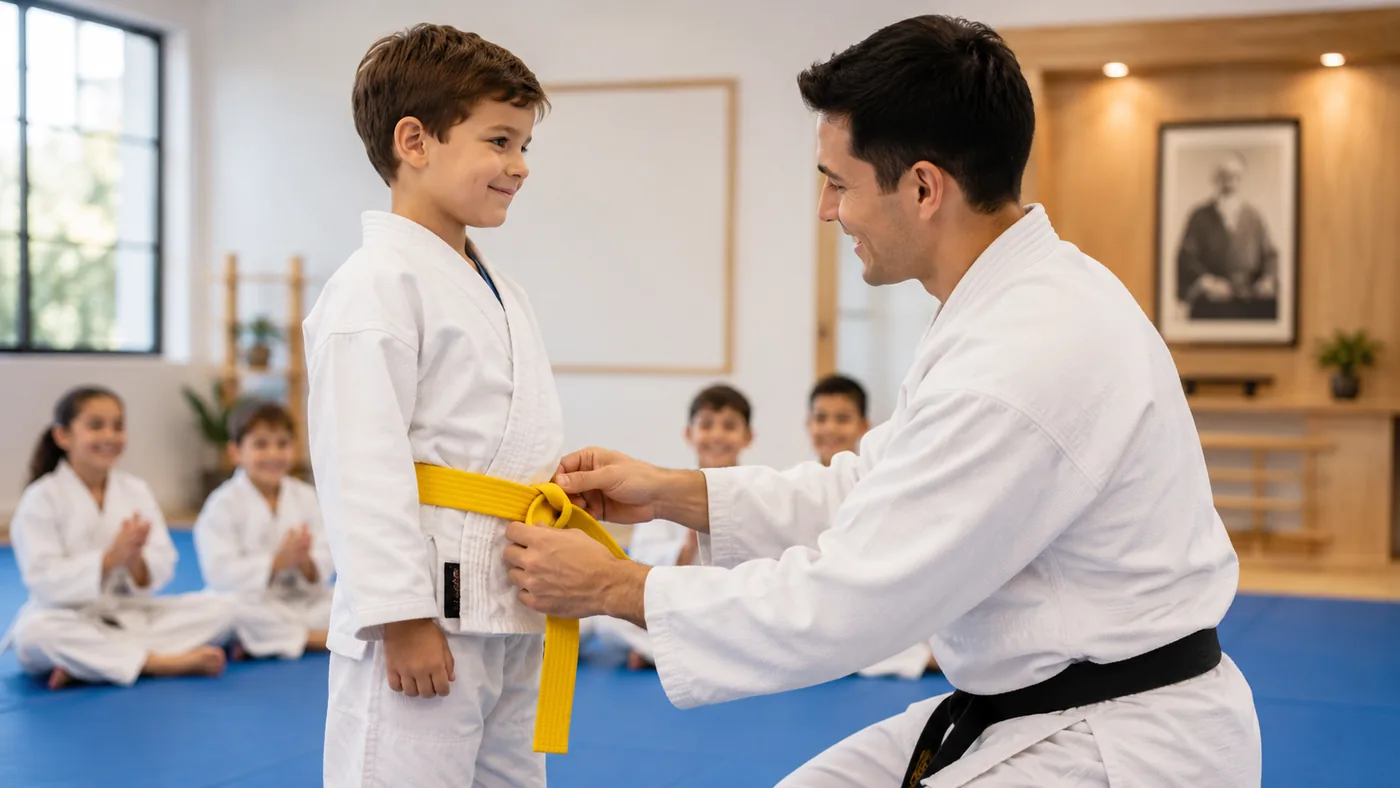
A young martial arts student receiving a new belt from an instructor during a class ceremony.

Martial Arts

How the Belt System Works for Kids

A parent-friendly guide to white belt, rank stripes, recognition stripes and the growing requirements as kids move through the belt system.

6 min read

Questions a guide cannot answer?

Watching one class usually settles it. Pick a location, a program and a time — your first class is free.

Free First Class