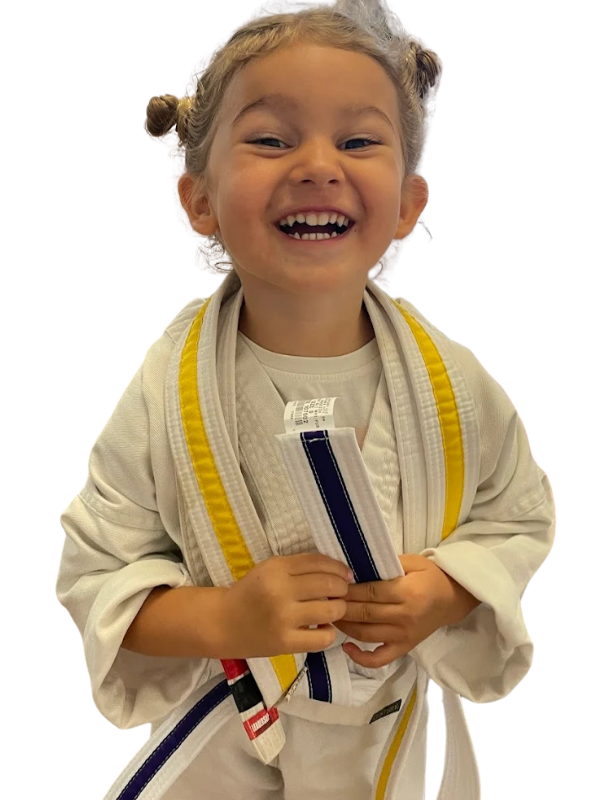
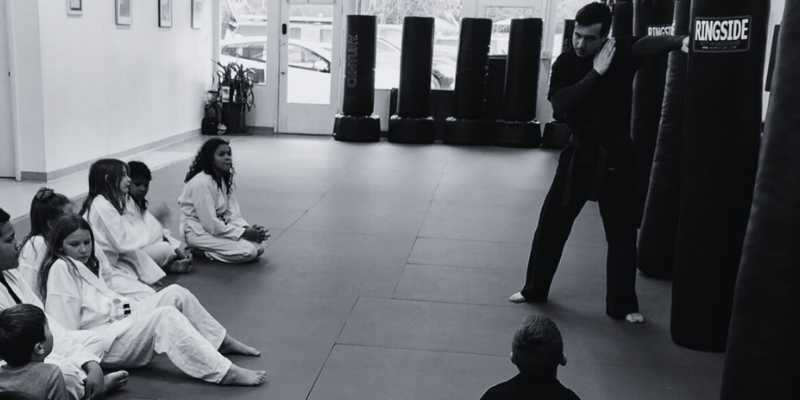
Educational guides for parents, teens and adults weighing up martial arts — written by the people who teach the classes.
What is the Elevate Martial Arts Learning Center?
The Elevate Martial Arts Learning Center is a free library of plain-language guides answering the questions families, teens and adults actually ask before joining a martial arts class — readiness, first-class expectations, safety, discipline differences and training frequency. It is written by our instructional team for students inMiddletown, Clearlake and the surrounding Lake County communities.
These guides are general educational information about how we teach. They are not medical, psychological or legal advice, and we do not promise specific outcomes from training.
Find a guide
Search the Learning Center
Search by keyword, or narrow the library by who it is written for, the age group, the topic, or the category. Audience matches rank first, so an adult search will not fill up with parenting guides.
First-week nerves are normal. Here is how to tell ordinary adjustment from something bigger, what to say on a hard morning, and how confidence is actually built.
Sleep, screens, homework and after-school decompression — a realistic weekday rhythm you can adapt, plus a sample schedule that survives an ordinary week.
What is genuinely available to families in Clearlake and along the north and east shore — parks, the lake, school programs and year-round classes — with realistic notes on weather and scheduling.
A practical look at what is actually available to Middletown families — seasonal leagues, outdoor recreation and year-round indoor options — and how to build a week that holds up in January.
What separates conflict from bullying, the warning signs worth noticing, exact phrases children can practise, and how to work with the school when it keeps happening.
Martial arts can support confidence and focus for some children, mainly because classes give repeated, structured practice at paying attention, trying something difficult and finishing it. It is not a treatment, and results vary from child to child.
Regulation is a skill children practice, not a mood they arrive with. Here is the notice-pause-reset-rejoin sequence, what a structured class can rehearse, and what to say afterward.
Hour limits are hard to enforce and easy to argue about. A displacement check — sleep, movement, schoolwork, friendships — is usually the more practical measure.
A predictable routine, one partner at a time, and no requirement to speak in front of the group — the reasons shy kids often settle in faster than parents expect.
What to look for in an activity for an autistic child in Lake County, why predictable structure helps many learners, and how group and private classes differ.
Bully prevention is mostly about awareness, communication with trusted adults, avoidance and de-escalation. Physical skills matter only as a last resort when a child cannot get away. Martial arts can support the first four; it does not stop bullying on its own.
Predictable routines, movement, visual demonstration and small wins are ordinary parts of a good martial arts class. They also happen to suit a lot of neurodiverse learners.
Games give kids progress, feedback and friends on demand. Here is how to build an offline routine that competes on the same terms instead of relying on willpower.
Two words parents use interchangeably, and one useful distinction: evidence builds confidence, while belonging and respectful correction support self-esteem.
What families and visitors can actually do around Hidden Valley Lake — including indoor play, golf, resident amenities and nearby public South County activities.
8 min read
Showing the first 24 of 104. Add a filter to narrow further.
Practical, judgment-free guides on emotions, confidence, focus, motivation, screens, friendships and sticking with hard things — written by coaches who see these questions every week.
A deep guide to preschool readiness: what matters, what parents often overestimate, what coaches can teach inside the class, and when waiting a few months really is the better choice.
A long-form guide to preschool separation: why doorways are hard, what parents and instructors can do, what makes it worse, and how to tell ordinary adjustment from a class that is not working.
A deep look at the real curriculum for ages 3–4: movement, attention, turns, body control, confidence, responsibility, technique and what not to expect yet.
Why age grouping matters, how attention changes class design, what games are doing under the surface, and how to tell playful teaching from chaotic teaching.
A deep guide to what self-control looks like at preschool age, why knowing a rule is different from using it, and how adults can coach recovery without demanding adult-level regulation.
A practical, non-salesy comparison of common preschool activities: what each format asks of a child, who tends to enjoy it, what parents should watch, and why the instructor matters more than the logo.
Choose what matters most to your family — participation, pacing, milestones, teamwork, schedule — and see which kinds of activities commonly support it. No personal details, nothing saved, and no claim that one category wins.
Physical education, confidence and focus, socialization and charter enrichment guidance for Lake County homeschool families — plus how we work with participating charter schools.
Eight side-by-side guides covering approximate annual cost, weekly hours, injury considerations, participation and the confidence, discipline, resilience and leadership each activity tends to build.
A deep guide to preschool readiness: what matters, what parents often overestimate, what coaches can teach inside the class, and when waiting a few months really is the better choice.
A long-form guide to preschool separation: why doorways are hard, what parents and instructors can do, what makes it worse, and how to tell ordinary adjustment from a class that is not working.
A deep look at the real curriculum for ages 3–4: movement, attention, turns, body control, confidence, responsibility, technique and what not to expect yet.
Why age grouping matters, how attention changes class design, what games are doing under the surface, and how to tell playful teaching from chaotic teaching.
A deep guide to what self-control looks like at preschool age, why knowing a rule is different from using it, and how adults can coach recovery without demanding adult-level regulation.
A practical, non-salesy comparison of common preschool activities: what each format asks of a child, who tends to enjoy it, what parents should watch, and why the instructor matters more than the logo.
A deep guide for parents watching preschool classes: when to step in, when to stay quiet, what to ask afterward, how to handle rough days and how to work with the coach without making the child feel evaluated.
A month-by-month deep dive into preschool progress: the invisible skills parents may miss, normal plateaus, belts and rewards, rough patches, and how to know whether the activity is still serving the child.
First-week nerves are normal. Here is how to tell ordinary adjustment from something bigger, what to say on a hard morning, and how confidence is actually built.
Sleep, screens, homework and after-school decompression — a realistic weekday rhythm you can adapt, plus a sample schedule that survives an ordinary week.
What separates conflict from bullying, the warning signs worth noticing, exact phrases children can practise, and how to work with the school when it keeps happening.
Games give kids progress, feedback and friends on demand. Here is how to build an offline routine that competes on the same terms instead of relying on willpower.
Hour limits are hard to enforce and easy to argue about. A displacement check — sleep, movement, schoolwork, friendships — is usually the more practical measure.
A predictable routine, one partner at a time, and no requirement to speak in front of the group — the reasons shy kids often settle in faster than parents expect.
Regulation is a skill children practice, not a mood they arrive with. Here is the notice-pause-reset-rejoin sequence, what a structured class can rehearse, and what to say afterward.
Remembering, starting, adjusting and finishing are skills, not personality traits. Here is what they look like in a class setting and how to carry one piece of it home.
Two words parents use interchangeably, and one useful distinction: evidence builds confidence, while belonging and respectful correction support self-esteem.
Most children cannot tell you which martial art suits them before they have tried any. A blended curriculum lets them find out while still building a coherent skill set.
Predictable routines, movement, visual demonstration and small wins are ordinary parts of a good martial arts class. They also happen to suit a lot of neurodiverse learners.
A practical look at what is actually available to Middletown families — seasonal leagues, outdoor recreation and year-round indoor options — and how to build a week that holds up in January.
What is genuinely available to families in Clearlake and along the north and east shore — parks, the lake, school programs and year-round classes — with realistic notes on weather and scheduling.
What to look for in an activity for an autistic child in Lake County, why predictable structure helps many learners, and how group and private classes differ.
A local guide to what to do around Middletown, Hidden Valley Lake and Cobb — including outdoor recreation, free activities, rainy-day choices, birthdays and structured kids programs.
What families and visitors can actually do around Hidden Valley Lake — including indoor play, golf, resident amenities and nearby public South County activities.
How coaches decide when a child is ready for Elite training, what the first trial looks like, and why competition is always an option rather than an obligation.
Most children can begin martial arts between ages 3 and 6, as long as the class is built for their age. At Elevate, Little Dragons starts at age 3, Tigers at 5 and Dragons at 9 — the right starting point depends far more on the class design than on the birthday.
A first class is short, structured and low-pressure. Your child will be greeted by name, warm up with the group, learn one or two simple skills, and finish with a closing routine. Comfortable clothes and a water bottle are all you need.
Martial arts can support confidence and focus for some children, mainly because classes give repeated, structured practice at paying attention, trying something difficult and finishing it. It is not a treatment, and results vary from child to child.
Bully prevention is mostly about awareness, communication with trusted adults, avoidance and de-escalation. Physical skills matter only as a last resort when a child cannot get away. Martial arts can support the first four; it does not stop bullying on its own.
Brazilian Jiu Jitsu is grappling on the ground, kickboxing is striking on the feet, and MMA blends the two. Most adults pick based on what they enjoy doing for an hour, not on which is objectively best — and many end up training more than one.
First-week nerves are normal. Here is how to tell ordinary adjustment from something bigger, what to say on a hard morning, and how confidence is actually built.
Sleep, screens, homework and after-school decompression — a realistic weekday rhythm you can adapt, plus a sample schedule that survives an ordinary week.
What separates conflict from bullying, the warning signs worth noticing, exact phrases children can practise, and how to work with the school when it keeps happening.
Games give kids progress, feedback and friends on demand. Here is how to build an offline routine that competes on the same terms instead of relying on willpower.
Hour limits are hard to enforce and easy to argue about. A displacement check — sleep, movement, schoolwork, friendships — is usually the more practical measure.
Open-ended playdates ask a lot of a child who is out of practice. Structured, repeating groups ask far less — and that is usually where friendships restart.
A predictable routine, one partner at a time, and no requirement to speak in front of the group — the reasons shy kids often settle in faster than parents expect.
Regulation is a skill children practice, not a mood they arrive with. Here is the notice-pause-reset-rejoin sequence, what a structured class can rehearse, and what to say afterward.
Remembering, starting, adjusting and finishing are skills, not personality traits. Here is what they look like in a class setting and how to carry one piece of it home.
Two words parents use interchangeably, and one useful distinction: evidence builds confidence, while belonging and respectful correction support self-esteem.
Cancelled plans, a lost match, a friend who chose someone else. A practical sequence for the hour after a letdown, and the phrases that tend to help rather than escalate.
Four scripts every child can learn, how to stop answering for them, and a graded ladder of real-world practice that starts with ordering their own drink.
Why the investigation makes it worse, a three-step repair script children can run without you, and how to handle the age gap and the child who always ends up in trouble.
The difference between a bad day and a real setback, the four things that support recovery, and how to reintroduce activity without pretending nothing happened.
A one-page agreement any family can write in half an hour: device-free zones, charging locations, the review schedule, and the clause that keeps kids talking to you when something goes wrong.
The four questions that separate ordinary worry from something worth a professional conversation, why reassurance stops working, and coping skills families can practise.
Praise evaluates a child ("you're so smart"); encouragement describes what they did ("you kept going after that mistake"). Encouragement tends to produce children who attempt harder things, because it values something they can repeat on purpose.
Emotion coaching means treating a big feeling as legitimate while still holding a limit on behaviour. In practice: notice it early, name it without adding a lesson, set the behavioural limit, and problem-solve later once the child is calm.
Children with ADHD generally do better with shorter instructions, predictable routines, movement built into the day rather than used as a reward, and immediate specific feedback. The standard stays the same; the size of each chunk changes.
The features that make an activity work for an autistic child are mostly structural: a predictable session order, low sensory load, a consistent instructor, an agreed way to take a break, and partial participation treated as success.
Routines fail because they are designed on a calm Sunday for an imaginary week. Build the version that works on your hardest day, make it visible, and let the routine do the reminding instead of your voice.
Responsibility grows when a child owns a real job that someone actually depends on, and when the ordinary consequences of forgetting are allowed to happen. Rescuing and reminding both remove the lesson.
Lasting motivation grows from three conditions: getting visibly better at something, having genuine choices within it, and belonging with the people doing it. External rewards work quickly and then crowd out the internal reasons.
Children build leadership by being given small amounts of real responsibility for other people, with an adult nearby. Titles, badges and pep talks do very little on their own; repeated practice at helping, explaining and taking ownership does most of the work.
Volunteering helps children most when it is regular, small and involves seeing the person who benefits. One recurring hour a month usually does more than a single dramatic project, because the child gets to build an identity as someone who helps.
Children build courage by repeatedly attempting things that could plausibly go badly in a small way. Removing all risk removes the practice, and the usual result is a child who is more fearful, not safer.
Most youth injuries are overuse rather than accidents, and the strongest protections are unglamorous: varied movement, real rest days, sleep, sensible load increases, and a culture where a child can say something hurts without losing status.
Public guidance generally advises against year-round single-sport specialisation before mid-adolescence. Varied movement supports broader development and is associated with lower overuse injury and burnout, while depth in one activity still matters for building genuine competence.
Coaches can adapt to almost anything they know about. Tell us the specific, useful details early — fears, diagnoses, hard weeks at home, what a bad day looks like — and raise concerns directly, privately, and before they have been building for a month.
Most children cannot tell you which martial art suits them before they have tried any. A blended curriculum lets them find out while still building a coherent skill set.
Predictable routines, movement, visual demonstration and small wins are ordinary parts of a good martial arts class. They also happen to suit a lot of neurodiverse learners.
A practical look at what is actually available to Middletown families — seasonal leagues, outdoor recreation and year-round indoor options — and how to build a week that holds up in January.
What is genuinely available to families in Clearlake and along the north and east shore — parks, the lake, school programs and year-round classes — with realistic notes on weather and scheduling.
How Lake County families actually build after-school afternoons — the options, the logistics, and why two consistent sessions beat four aspirational ones.
Practical PE options for homeschooling families in Lake County, what makes an activity easy to document, and how martial arts fits a homeschool schedule.
A component-by-component look at how martial arts maps onto physical education standards, and why participation rates make it particularly effective as PE.
What to ask your charter before enrolling a student in an outside PE or enrichment class, and how martial arts typically fits an independent-study plan.
What to look for in an activity for an autistic child in Lake County, why predictable structure helps many learners, and how group and private classes differ.
A local guide to what to do around Middletown, Hidden Valley Lake and Cobb — including outdoor recreation, free activities, rainy-day choices, birthdays and structured kids programs.
What families and visitors can actually do around Hidden Valley Lake — including indoor play, golf, resident amenities and nearby public South County activities.
The meltdown that happens the minute your child walks in the door is rarely about the door. It is often the release of a full day held together with effort.
A child who gives up or gets upset at the first sign of difficulty is not being dramatic. They are running out of tools faster than the task is asking for them.
Constant arguing is exhausting, but it is rarely random. Most of the time, a child has learned that pushing back gets them something, even if that something is just your attention.
If your child only seems to hear you on the third or fourth try, the problem is usually not their hearing — it is what they have learned about which requests actually count.
Comparison is one of the most natural things a developing brain does. The goal is not to eliminate it, but to give a child another, steadier way to measure themselves.
"Nobody wants to play with me" is one of the hardest sentences a parent hears. Most of the time it describes a moment, not a pattern — but the moment still needs attention.
Being picked last is one of the more public forms of disappointment a child can experience. It's worth taking seriously — and it's also more fixable than it feels in the moment.
Summer's loose schedule doesn't switch off overnight. A gradual return to routine, started a week or two early, makes the first day feel far less like a wall.
Independence isn't something you announce to a child — it's something they build through repeated chances to handle things themselves, including the chances where they don't get it right the first time.
The most effective organization systems for kids are the boring, simple ones — one folder, one spot for shoes, one place to check what's due — maintained consistently rather than an elaborate system nobody keeps up.
The tripped-in-the-hallway moment your child cannot stop replaying is, to everyone else, already forgotten. Helping them believe that takes practice, not a single conversation.
Siblings who fight constantly are not necessarily siblings who dislike each other. Most sibling friction responds better to structure and shared positive time than to refereeing every argument.
A child who behaves out of fear and a child who behaves out of respect can look identical in the moment — but only one of them holds up when the adult isn't in the room.
Responsibility is a skill built through repetition, not a trait a child either has or doesn't. The way to grow it is the same as any other skill: real practice, real stakes, and consistent follow-through.
Most family routines don't fail because the idea was wrong. They fail because they were too ambitious, too vague, or too dependent on everyone remembering on their own.
How coaches decide when a child is ready for Elite training, what the first trial looks like, and why competition is always an option rather than an obligation.
Most children can begin martial arts between ages 3 and 6, as long as the class is built for their age. At Elevate, Little Dragons starts at age 3, Tigers at 5 and Dragons at 9 — the right starting point depends far more on the class design than on the birthday.
A first class is short, structured and low-pressure. Your child will be greeted by name, warm up with the group, learn one or two simple skills, and finish with a closing routine. Comfortable clothes and a water bottle are all you need.
Martial arts can support confidence and focus for some children, mainly because classes give repeated, structured practice at paying attention, trying something difficult and finishing it. It is not a treatment, and results vary from child to child.
Bully prevention is mostly about awareness, communication with trusted adults, avoidance and de-escalation. Physical skills matter only as a last resort when a child cannot get away. Martial arts can support the first four; it does not stop bullying on its own.
No physical activity is risk-free, but beginner martial arts training is structured to keep risk low: controlled drilling, supervised partner work, deliberate pairing and no hard sparring for new students. How a school runs its classes matters more than the style.
Two classes a week is the usual starting point for both children and adults. It is frequent enough for skills to carry over between sessions and light enough to sustain through a busy season, which matters more than any single week of training.
5 min read
Browse by topic
Categories
Every topic below is a landing page that grows as we publish. Topics without guides yet are already planned.
Motivation, confidence, phones and independence, friendship and belonging, and what changes when a teenager trains on the adult schedule. Written for parents of teens, with sections that speak to teenagers directly.
Adult training from a standing start: whether age is really a barrier, training after 40, getting back in shape when gyms have never worked, why programs get abandoned, and choosing between jiu-jitsu and kickboxing.